Ethics Beyond Law: Why Humanity Must Remain the Highest Standard
Law is necessary for social order, but law alone is not enough to guide human civilization toward justice. Laws can regulate behavior, punish wrongdoing, and preserve institutional stability, yet they do not always represent the highest form of moral truth. There are moments in history when law has protected power more than people, order more than justice, and authority more than conscience. In such moments, ethics becomes more important than legality.
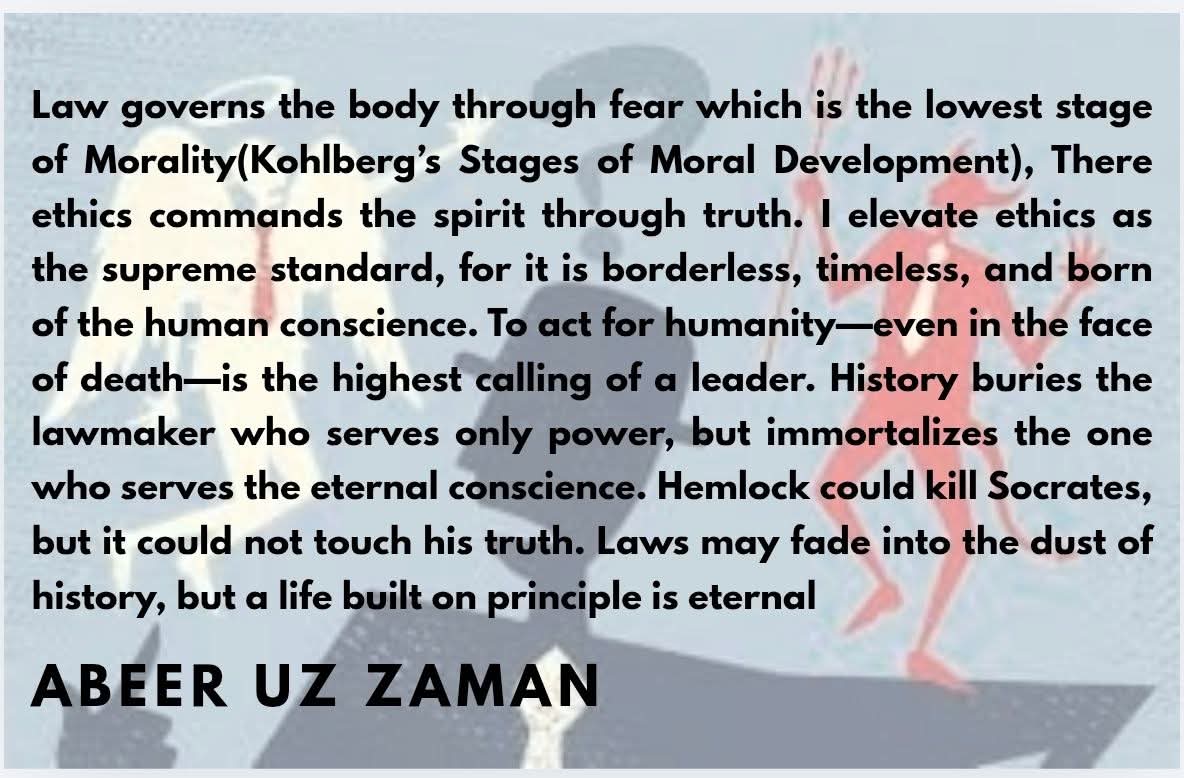
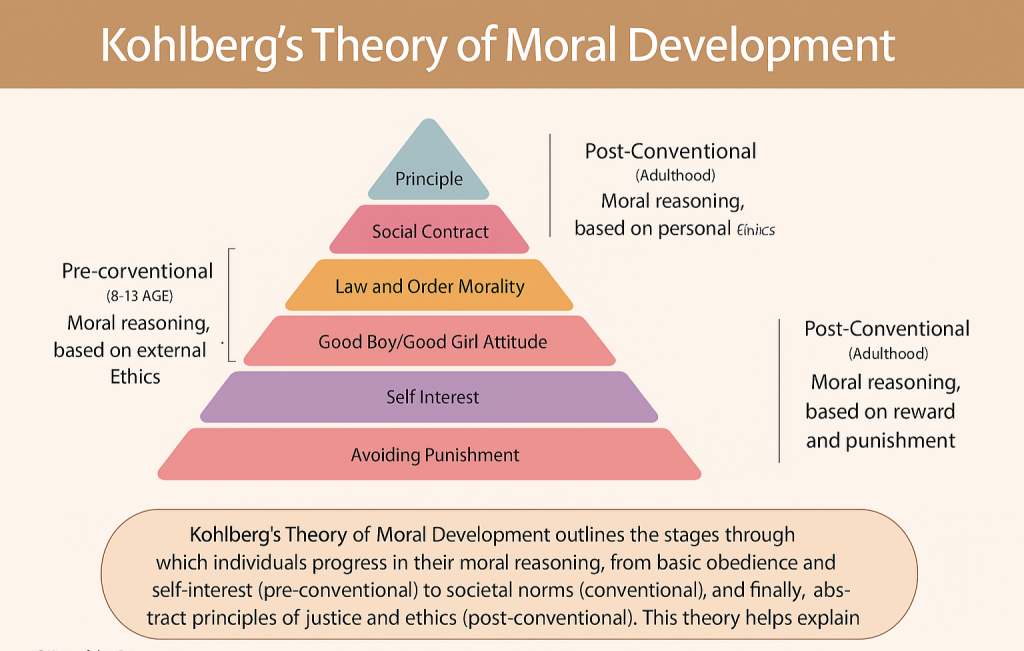
This is why I believe law is often the lowest form of ethics, not because law is unimportant, but because law can be driven by fear, force, and compulsion. Human beings may obey law to avoid punishment. But ethics asks for something deeper. Ethics speaks not to the fear of penalty, but to the conscience of the individual. It asks what is right even when power says otherwise, what is just even when systems are silent, and what remains humane when institutions become cold.
A society governed only by law may remain orderly, but it will not necessarily remain moral. Law can tell citizens what they must not do. Ethics asks what they should do. Law can define crime. Ethics defines duty. Law can discipline the body through consequence. Ethics commands the soul through truth. This distinction is crucial, especially in public life, journalism, leadership, and social responsibility.
The great moral problem of human history is that legality and justice do not always walk together. Many unjust acts have been carried out under legal authority. Many courageous acts of truth and conscience have first appeared illegal, inconvenient, or dangerous to the ruling order. That is why law should never be treated as the final measure of morality. It is only one measure, and often an imperfect one.
Ethics, by contrast, belongs to a higher plane. It is not confined by borders, governments, or political convenience. It is rooted in conscience, dignity, humanity, and truth. Ethical responsibility asks us to act not merely as obedient subjects, but as moral beings. It demands that we consider the human consequence of our choices, not only their procedural correctness. It requires compassion where law may offer only technicality, and justice where law may offer only compliance.
This is particularly important in fields like journalism, communication, leadership, and public service. A journalist may be legally safe while still acting unethically. A leader may operate within the framework of law while abandoning compassion and humanity. A state may defend an action through legal argument while violating the deeper spirit of justice. In all such cases, ethics becomes the necessary corrective. It asks the question law cannot always answer: is this right?
To place ethics above law is not to reject law. It is to insist that law must remain accountable to humanity. Law should serve justice, not replace it. It should protect dignity, not suppress it. It should be informed by conscience, not stripped of it. When law loses its ethical foundation, it becomes merely an instrument of power.
Humanity must therefore remain the highest standard. To act for humanity, even when it is difficult, costly, or unpopular, is among the highest callings of a moral life. The truly principled person is not the one who obeys every rule without reflection, but the one who remains faithful to truth, compassion, and justice even when the surrounding world rewards silence, fear, or convenience.
History repeatedly confirms this. Many lawmakers, rulers, and systems that once seemed untouchable have faded into dust. Yet individuals who stood for conscience continue to live in memory. Power can dominate for a time, but it cannot erase moral truth forever. A life built only on legality may pass with the age that produced it. A life built on principle outlives its moment.
This is why ethics must remain supreme. It is borderless, timeless, and deeply human. It reminds us that beyond law, beyond fear, and beyond power, there is still a higher obligation: to protect dignity, to defend truth, and to serve humanity.
In the end, law may govern society, but ethics gives it meaning. And when the two come into conflict, humanity should remain our final compass.





One Comment