Badal vs Badal: How a Bangladeshi Tourist Lost 18 Years
Wrongful Imprisonment, Human Rights Failure, and Cross-Border Legal Limbo in South Asia
Abstract
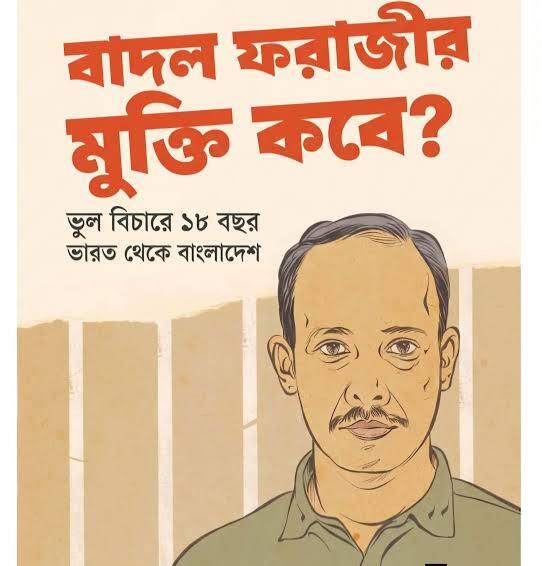
The case of Badal Faraji represents one of the most disturbing examples of alleged wrongful imprisonment, judicial misidentification, and cross-border legal failure in contemporary South Asia. Arrested in India in 2008 while travelling as a Bangladeshi tourist, Faraji was convicted in connection with a murder case allegedly involving another individual identified as “Badal Singh.” Despite repeatedly asserting that he was not the person sought by authorities, he spent more than eighteen years inside prison systems across India and Bangladesh.
His imprisonment evolved beyond a criminal case into a larger humanitarian and institutional crisis involving due process concerns, language barriers, legal vulnerability of foreign nationals, prisoner transfer complications, and prolonged detention despite completion of significant custodial periods.
This analytical longform examines the Badal Faraji case through legal, humanitarian, diplomatic, and correctional perspectives. Drawing from public reports, international human rights standards, prison governance principles, and firsthand prison observations by the author, the article evaluates how institutional weaknesses may transform a mistaken identity case into a prolonged deprivation of liberty.
The article also explores a paradox rarely discussed in South Asian prison narratives: while Faraji allegedly lost nearly two decades to institutional failure, he simultaneously transformed himself through education, discipline, leadership, cultural engagement, and rehabilitative participation inside prison.
Ultimately, the “Badal vs Badal” case raises urgent questions for South Asian governments, courts, prison administrations, and human rights organizations:
- How vulnerable are poor foreign detainees within regional justice systems?
- What happens when cross-border legal coordination becomes bureaucratically paralyzed?
- And what moral responsibility does a state carry when a human being loses years of life inside institutional uncertainty?
Introduction
Justice systems are expected to separate guilt from innocence through evidence, procedure, and fairness. Yet history repeatedly demonstrates that when institutional processes become careless, excessively procedural, politically pressured, or bureaucratically rigid, identity itself may become dangerously fragile.
The story of Badal Faraji illustrates how a partial similarity in a name may evolve into a devastating human rights tragedy when combined with weak legal safeguards, language barriers, inadequate defense capacity, cross-border administrative complexity, and structural inequality.
According to multiple Bangladeshi and international media reports, including coverage by Prothom Alo, The Daily Star, Deutsche Welle Bangla, Bangla Tribune, Dhaka Tribune, and Ittefaq, Faraji travelled to India in 2008 as a tourist. Shortly after entering the country, he was detained and later prosecuted in connection with a murder case involving another accused person reportedly named “Badal Singh.”
Despite repeatedly claiming innocence and identity mismatch, he was eventually sentenced to life imprisonment.
What followed was not merely incarceration.
It became the gradual disappearance of a human being into a complex legal and bureaucratic vacuum stretching across two sovereign states.
For many people, wrongful imprisonment is an abstract legal concept discussed in reports, courtrooms, or academic research.
But inside prison walls, wrongful imprisonment becomes something far more brutal:
- lost youth,
- lost family,
- lost identity,
- psychological erosion,
- and the slow normalization of uncertainty.
The Badal Faraji case therefore deserves attention not merely as an isolated criminal matter, but as a larger case study in institutional accountability, human dignity, and cross-border justice failure in South Asia.
A Name That Became a Sentence
In July 2008, Badal Faraji travelled from Bangladesh to India on a tourist visa. Reports indicate that shortly after entering India, he was detained by authorities investigating the murder of an elderly woman in Amar Colony, Delhi.
According to various media accounts, the individual originally sought in the case was allegedly identified as “Badal Singh,” reportedly connected to the victim’s household as a domestic worker.
However, the Bangladeshi tourist who ultimately became prosecuted and convicted was Badal Faraji — a resident of Mongla, Bagerhat.
This immediately raises one of the central questions surrounding the case:
How did a foreign tourist become convicted for a crime allegedly committed by another individual?
The answer appears to involve multiple intersecting vulnerabilities:
- identity verification weakness,
- inadequate legal representation,
- linguistic disadvantage,
- poverty,
- institutional overreliance on police narratives,
- and the structural vulnerability of foreign detainees.
For poor or socially disconnected individuals, especially foreign nationals, criminal justice systems can become environments where institutional momentum often overwhelms individual capacity for defense.
Once formally identified by investigative authorities, reversing that narrative becomes extraordinarily difficult.
In many South Asian systems, especially for marginalized defendants, the legal process itself may gradually become punishment.
Foreignness as Vulnerability
One of the most overlooked dimensions of the case is the vulnerability attached to being a foreign prisoner.
A local accused person may still possess:
- family networks,
- political connections,
- social familiarity,
- linguistic comfort,
- community visibility,
- or legal accessibility.
A foreign detainee often possesses none of these.
A foreign prisoner exists inside an unfamiliar institutional universe:
- unfamiliar police culture,
- unfamiliar court procedures,
- unfamiliar prison structures,
- unfamiliar legal terminology,
- and unfamiliar language.
This structural isolation significantly weakens the practical ability to defend oneself.
International human rights law recognizes these dangers.
Article 14 of the International Covenant on Civil and Political Rights guarantees the right to fair trial protections, including adequate interpretation and meaningful participation in legal proceedings.
But meaningful participation is impossible if an accused person cannot properly understand:
- charges,
- legal terminology,
- courtroom procedure,
- witness statements,
- or lawyer communication.
Language therefore becomes more than communication.
It becomes power.
And for vulnerable defendants, lack of language becomes institutional disadvantage.
Due Process and Human Rights Concerns
The Badal Faraji case raises multiple legal and human rights concerns under international standards.
Universal Declaration of Human Rights (UDHR)
Article 9 states:
“No one shall be subjected to arbitrary arrest, detention or exile.”
If identity verification procedures were inadequate, or if a defendant was unable to meaningfully challenge mistaken identification, serious concerns arise regarding procedural fairness.
International Covenant on Civil and Political Rights (ICCPR)
Both India and Bangladesh are parties to the ICCPR.
Relevant provisions include:
Article 14
The right to:
- fair hearing,
- legal defense,
- interpretation assistance,
- and informed participation.
Article 9
Protection against arbitrary detention.
Article 10
Humane treatment of prisoners.
The case also raises broader concerns associated with:
- prolonged detention,
- sentence review transparency,
- legal access for foreign nationals,
- and bureaucratic delay in release procedures.
Wrongful Imprisonment Beyond the Courtroom
Wrongful imprisonment is often imagined as a courtroom error.
In reality, wrongful imprisonment becomes a long-term social and psychological condition.
Globally, wrongful conviction studies demonstrate that victims frequently suffer:
- depression,
- institutional dependency,
- trauma,
- identity disintegration,
- economic collapse,
- and social alienation.
But South Asian societies rarely discuss the long-term human cost of incarceration.
Years spent inside prison do not disappear after release.
Time itself becomes permanently altered.
A person who loses eighteen years loses more than freedom.
He loses:
- social continuity,
- family relationships,
- economic growth,
- emotional stability,
- and the ordinary experience of life.
This human cost is difficult to quantify legally.
But morally, it remains enormous.
Tihar Jail and the Paradox of Reform
Tihar Jail occupies a unique place within South Asian prison discourse.
For decades, it has simultaneously represented:
- overcrowding,
- harsh incarceration,
- security intensity,
- and prison reform experimentation.
Indian prison reform initiatives introduced:
- educational access,
- vocational training,
- open schooling,
- university distance education,
- meditation programs,
- counseling,
- and cultural rehabilitation activities.
Within this environment, Badal Faraji reportedly transformed himself through education and disciplined participation.
According to publicly available reports and advocacy references, he completed:
- Secondary School studies,
- Higher Secondary education,
- English language training,
- and university-level coursework through IGNOU.
This transformation reveals one of the most painful paradoxes in the entire story.
The same institutional structure that allegedly failed to protect his liberty became the institution through which he intellectually rebuilt himself.
Prison scholars often argue that education inside prison restores:
- dignity,
- self-worth,
- discipline,
- psychological resilience,
- and future orientation.
Faraji’s prison education journey therefore symbolizes both:
- extraordinary human adaptability,
- and the tragic waste created by wrongful or prolonged incarceration.
My Personal Encounter With Badal Faraji Inside Kashimpur Prison
Following his transfer to Bangladesh under the bilateral prisoner transfer agreement between India and Bangladesh, I personally encountered Badal Faraji inside Kashimpur Prison.
My interaction with him remains one of the most psychologically complex prison experiences I have witnessed.
When people imagine long-term prisoners, they often imagine broken individuals consumed entirely by anger, hopelessness, or collapse.
But Faraji did not appear psychologically defeated.
What stood out immediately was his composure.
Despite spending years behind bars across two countries, he maintained discipline, structure, and an unusual degree of emotional restraint.
Inside prison, he actively participated in:
- PT (physical training),
- sports coordination,
- inmate recreational activities,
- cultural events,
- music-related activities,
- and various forms of inmate engagement.
Many inmates respected him not merely as another prisoner, but as someone capable of organizing people and maintaining morale.
He appeared deeply familiar with prison routines, prison psychology, and the emotional conditions of long-term inmates.
There was frustration in his voice.
But there was also remarkable resilience.
I personally observed how he interacted with inmates in a calm and structured manner. He did not behave like someone psychologically detached from society. Rather, he appeared like a person attempting to preserve humanity within deeply inhuman circumstances.
That contradiction stayed with me.
It was profoundly unsettling to witness a man who reportedly lost nearly two decades to institutional processes still contributing positively inside prison society.
Inside prison, many individuals psychologically collapse.
Some become violent.
Some become emotionally detached.
Some lose all future orientation.
Faraji, however, seemed to preserve discipline through activity.
In many ways, prison itself appeared to become his mechanism of survival.
This creates another painful contradiction:
the institutional system recognized his rehabilitative value and leadership potential inside prison, while simultaneously failing to resolve the larger controversy surrounding his imprisonment.
Prisoner Transfer and Bureaucratic Limbo
In July 2018, Badal Faraji was transferred to Bangladesh under the bilateral prisoner transfer mechanism between India and Bangladesh.
Such agreements are generally rooted in humanitarian correctional philosophy.
Their objectives include:
- allowing prisoners to remain closer to families,
- reducing linguistic isolation,
- facilitating rehabilitation,
- improving reintegration,
- and strengthening diplomatic cooperation.
The transfer mechanism itself is theoretically humanitarian.
However, in Faraji’s case, transfer did not resolve the deeper legal controversy.
Instead, it appears to have transferred complexity from one jurisdiction to another.
Reports published in Bangladeshi media indicate that despite completion of major custodial thresholds associated with life sentence remission consideration, Faraji reportedly remained imprisoned due to administrative and legal complications.
This raises major legal and diplomatic questions:
- Which state holds ultimate release authority?
- How are remission calculations harmonized between jurisdictions?
- What happens when bureaucratic interpretation delays liberty?
- Who bears responsibility for prolonged uncertainty?
Cross-border prisoner governance in South Asia remains significantly under-discussed.
The Badal Faraji case exposes critical weaknesses in:
- sentence harmonization,
- remission procedures,
- release transparency,
- legal review mechanisms,
- and intergovernmental coordination.
From a human rights perspective, prolonged detention caused by administrative ambiguity may itself become a form of institutional injustice.
The Human Cost of Delay
According to rights activists and media reports, Faraji completed fourteen years of imprisonment in July 2022 — a major threshold commonly associated with remission consideration in life imprisonment structures.
Yet reports indicate that release complications continued.
For prisoners, uncertainty itself becomes punishment.
Inside prison psychology, uncertainty often damages individuals more deeply than fixed punishment.
A prisoner who knows his release date psychologically survives differently from one trapped inside administrative ambiguity.
Years of uncertainty reshape:
- mental stability,
- emotional endurance,
- social expectation,
- and future imagination.
This is especially devastating for long-term prisoners.
By the time many prisoners complete decades of incarceration, their original social worlds no longer exist in the same form.
Families age.
Parents die.
Communities change.
Economic opportunities disappear.
Technology changes.
Society moves forward without them.
In wrongful imprisonment cases, this suffering becomes morally even heavier because the deprivation itself remains contested.
Human Rights Analysis
From a human rights perspective, the Badal Faraji case potentially implicates:
- fair trial concerns,
- mistaken identity concerns,
- language rights concerns,
- arbitrary detention concerns,
- prolonged detention concerns,
- and post-sentence administrative delay concerns.
Relevant legal frameworks include:
- Universal Declaration of Human Rights,
- International Covenant on Civil and Political Rights,
- Nelson Mandela Rules,
- and broader international norms surrounding humane treatment and procedural fairness.
The Nelson Mandela Rules
The UN Standard Minimum Rules for the Treatment of Prisoners — commonly called the Nelson Mandela Rules — emphasize:
- prisoner dignity,
- educational access,
- rehabilitation,
- humane treatment,
- and reintegration.
Faraji’s educational achievements and constructive prison participation reflect aspects of rehabilitative prison philosophy.
But rehabilitation cannot substitute for justice.
A prison system may provide education, cultural activity, and discipline.
Yet if the underlying conviction or prolonged detention remains deeply controversial, rehabilitation alone cannot erase larger moral questions.
Institutional Failure Beyond One Individual
The “Badal vs Badal” case is not important only because of one man.
It matters because it reveals broader structural weaknesses inside regional justice systems.
The case exposes:
- vulnerability of foreign detainees,
- bureaucratic rigidity,
- weak transparency,
- limited cross-border accountability,
- and insufficient safeguards against misidentification.
It also demonstrates how institutional systems may continue functioning procedurally even while producing devastating human consequences.
In many cases, institutions do not intentionally create injustice.
Rather, injustice emerges gradually through:
- indifference,
- delay,
- procedural rigidity,
- and lack of accountability.
That may be one of the most frightening aspects of the case.
A human being can disappear into systems not because of one dramatic act, but because multiple institutions slowly fail simultaneously.
Why This Case Matters Beyond Bangladesh and India
The Badal Faraji case reflects broader realities across South Asia.
The region contains:
- heavily burdened courts,
- overcrowded prisons,
- weak legal aid systems,
- vulnerable migrant populations,
- and politically sensitive border dynamics.
Thousands of poor or undocumented individuals move across borders each year for:
- labor,
- tourism,
- family reasons,
- or survival.
Many possess limited legal literacy.
When such individuals enter criminal justice systems abroad, they often become institutionally invisible.
The Faraji case therefore deserves international human rights attention not merely as an individual tragedy, but as a warning regarding cross-border justice vulnerability in South Asia.
Conclusion
The story of Badal Faraji is ultimately a story about the fragility of justice when institutions fail to protect vulnerable human beings.
A tourist became a convict.
A name became a sentence.
And a bureaucratic process became nearly two decades of lost life.
Yet inside prison walls, Faraji pursued education, discipline, leadership, and human connection.
He transformed himself while waiting for systems larger than himself to recognize what he reportedly maintained from the beginning:
that he was not the man they were looking for.
The “Badal vs Badal” case therefore stands as more than a criminal case.
It is a warning.
It warns how easily justice systems may fail when:
- identity verification weakens,
- poverty limits defense,
- language isolates defendants,
- and bureaucracy overwhelms humanity.
It also demonstrates the devastating consequences of prolonged administrative delay inside cross-border prisoner transfer systems.
Faraji’s experience deserves:
- serious legal review,
- institutional accountability,
- transparent sentence evaluation,
- and broader regional discussion regarding wrongful imprisonment and cross-border justice reform.
Because justice delayed for eighteen years is not merely delayed justice.
It risks becoming justice denied.