IMF, the World Bank, ADB, and the WTO: Bangladesh’s Economic Crossroads, the Current Crisis, and the Way Forward
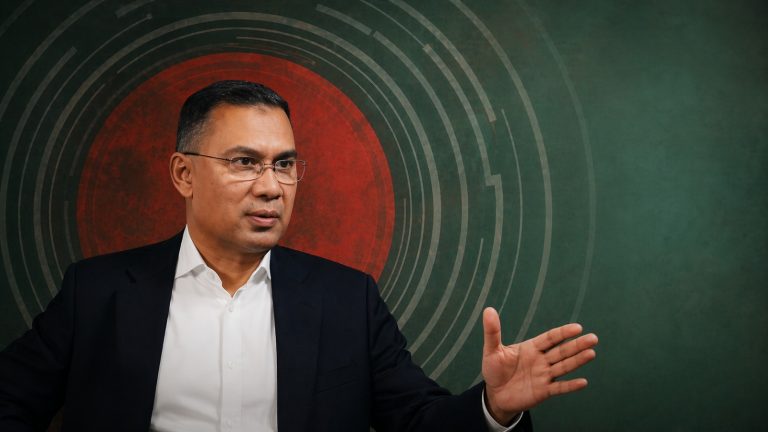
Bangladesh’s economy is at a difficult crossroads. Inflation remains stubbornly high, tax collection is weak, the banking sector is fragile, energy imports are costly, and pressure on foreign exchange has not fully disappeared. In this context, the role of major international institutions has become more visible than ever. The debate is no longer limited to economists and policymakers. It now directly affects ordinary citizens: whether electricity prices will rise, whether subsidies will be cut, whether the currency will weaken further, whether banks can regain trust, and whether national policy is being shaped by domestic priorities or by the pressure to unlock foreign loan tranches. Selim Jahan’s Bonik Barta editorial captures this tension well, arguing that IMF conditions are not abstract policy clauses but real forces that can shape growth, inequality, social spending, and daily life.
To understand Bangladesh’s current economic situation, four institutions must be examined together: the World Bank, the International Monetary Fund (IMF), the Asian Development Bank (ADB), and the World Trade Organization (WTO). They are not the same institution, they do not have the same mandate, and they do not affect Bangladesh in the same way. Yet together they shape the country’s development finance, macroeconomic stabilization, trade rules, policy reform, and long-term competitiveness. My uploaded source materials also show this broad relationship, especially in infrastructure, social sectors, trade, fiscal policy, and external stability.
- The Four Institutions: Origins, Purposes, Slogans, Leadership, and Context
1.1 The World Bank
The World Bank emerged from the 1944 Bretton Woods framework. Its original postwar reconstruction role evolved into a much broader development mission focused on poverty reduction, infrastructure, human development, governance reform, and technical support for developing countries. Today, the World Bank says its vision is “a world free of poverty on a livable planet,” and its mission is to “end extreme poverty and boost shared prosperity on a livable planet.” Its current President is Ajay Banga, who began his five-year term on June 2, 2023.
The World Bank is not one single lending arm. The World Bank Group includes IBRD, which lends to middle-income and creditworthy low-income countries, and IDA, which provides grants and low-interest loans to the poorest countries. It also includes IFC, MIGA, and ICSID. The World Bank’s role is therefore broader than simple lending: it combines financing, expertise, institutional support, and policy advice.
In Bangladesh, the World Bank has long been a major development partner in education, health, social protection, infrastructure, climate resilience, local governance, and rural development. Your uploaded assignment notes mention primary education, health and population projects, social safety nets, climate projects, and broader infrastructure financing among its areas of involvement.
1.2 The International Monetary Fund (IMF)
The IMF was also created in 1944 under the Bretton Woods system, but its purpose differs from the World Bank’s. The IMF focuses on international monetary cooperation, macroeconomic and financial stability, exchange rate issues, balance-of-payments support, and policy surveillance. The IMF says it works to achieve sustainable growth and prosperity for all of its member countries by supporting economic policies that promote financial stability and monetary cooperation. Its current Managing Director is Kristalina Georgieva, who has served since October 1, 2019, and began a second term on October 1, 2024.
Unlike some institutions, the IMF does not really operate with a short public-facing slogan. Its official mission statement is the best guide to its purpose. In practical terms, the IMF enters when countries face reserve stress, fiscal pressure, exchange-rate distortion, debt pressure, or broader macroeconomic instability.
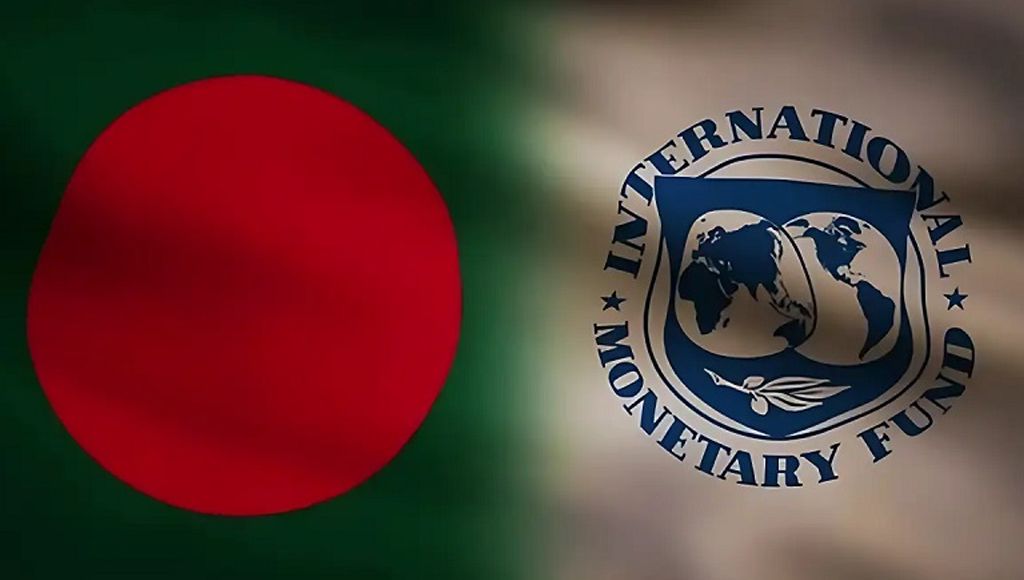
Bangladesh has been an IMF member since the early years after independence. Your uploaded materials note the Fund’s role in reserve stabilization, fiscal and tax reform, exchange-rate management, and macroeconomic crisis support, including the more recent multi-billion-dollar arrangement. 9
1.3 The Asian Development Bank (ADB)
The ADB was established in 1966 as a regional multilateral development bank for Asia and the Pacific. Its long-term strategic vision under Strategy 2030 is “a prosperous, inclusive, resilient, and sustainable Asia and the Pacific.” Its current President is Masato Kanda, elected in November 2024 and in office since February 24, 2025.
ADB works heavily in transport, energy, urban development, water, education, climate resilience, public sector management, and technical assistance. In Bangladesh, your uploaded source notes its long-standing role in infrastructure, energy, transport, urban water, technical education, and co-financing support. 11
1.4 The World Trade Organization (WTO)
The WTO was established on January 1, 1995, replacing the GATT system through the Marrakesh Agreement. It describes itself as the only global international organization dealing with the rules of trade between nations. Its broad objective is to use trade rules to improve living standards, create jobs, and help people’s lives improve through a fairer and more predictable global trading framework. The current Director-General is Dr Ngozi Okonjo-Iweala, who first took office in 2021 and began her second four-year term on September 1, 2025.
The WTO also does not use a simple slogan in the same way a political campaign might. Its institutional identity rests in rules-based trade and the idea of improving people’s lives through trade. For Bangladesh, the WTO has been crucial in LDC-related trade benefits, garments competitiveness, dispute rules, and now LDC-graduation transition challenges. Your uploaded material highlights duty-free/quota-free access, garments competitiveness, trade dispute settlement, diversification, and the challenge of post-graduation readiness.
- IMF Conditionality in Bangladesh: From the Past to the Present
The IMF debate in Bangladesh is not new. Selim Jahan’s Bonik Barta editorial reminds readers that during the structural adjustment era of the 1980s, IMF stabilization conditions in many developing countries slowed growth, deepened poverty and inequality, and compressed social spending. His core warning is that “economic stability” should not be pursued by making people’s lives more unstable. He notes that Bangladesh’s own earlier experience was not outside this broader pattern.
That said, it would also be misleading to describe the IMF in purely one-dimensional terms. Bangladesh approached the IMF for support in 2023 amid reserve depletion, external financing pressure, and the aftershocks of global commodity disruptions. Reuters reported in May 2025 that Bangladesh was set to receive $1.3 billion after a reform deal was reached under its $4.7 billion program, following difficult negotiations over exchange-rate flexibility, fiscal policy, and revenue reforms. Reuters later reported in June 2025 that the IMF completed combined reviews and made about $884 million immediately accessible, while also approving additional support under resilience-related facilities.
In Bangladesh’s case, IMF conditions have broadly fallen into several categories: exchange-rate flexibility, revenue mobilization, tax reform, subsidy rationalization, reserve transparency, fiscal discipline, and banking-sector reforms. Selim Jahan’s editorial specifically points to conditions including separating revenue policy from revenue administration, increasing personal income-tax collection, rationalizing VAT, reducing tax exemptions, revising financial-sector laws, bringing down non-performing loans in state-owned banks, and gradually moving the exchange rate toward the market.
Why are these conditions imposed? At one level, the logic is understandable. Bangladesh has persistently low tax-to-GDP performance, significant energy-related fiscal pressure, weak bank governance, and recurring distortions in foreign exchange management. IMF Article IV reporting in early 2026 said Bangladesh continued to face weak revenue mobilization, banking-sector vulnerabilities, incomplete implementation of exchange-rate reforms, and elevated inflation, all of which were weighing on macroeconomic stability and growth prospects. The IMF projected inflation at 8.9 percent in FY26 before easing later, and projected gradual growth recovery if tax and financial-sector reforms were implemented.
But the crisis lies in the distributional consequences. What may look rational at the macro level can feel deeply unequal at the household level. Rapid subsidy reduction can raise electricity, gas, transport, and food-related costs. Tax changes can become regressive if they rely too heavily on indirect burdens. Exchange-rate flexibility may reduce distortions and support remittance incentives, but it can also feed inflation in an import-dependent economy. This is exactly why Selim Jahan insists that the issue is not whether Bangladesh will be “tough” or “soft” toward IMF conditions, but whether it can take a realistic position grounded in national interest.
- The Current Context: Where the Pressure Is Building
Bangladesh’s present difficulties are not caused by one institution alone. They are the product of overlapping weaknesses.
First, inflation remains elevated. IMF reporting in 2026 made clear that inflation was still high and that growth would remain under pressure unless reforms were implemented. Persistently high inflation erodes household purchasing power, deepens hardship, and complicates every other reform effort.
Second, the banking sector remains a serious vulnerability. Reuters reported in April 2026 that Bangladesh’s finance minister warned that without replenishing capital in struggling banks and parts of the private sector, other reforms would be ineffective. That is a major signal: macroeconomic reforms cannot succeed if the financial system itself remains weak and politically distorted.
Third, the energy sector has become a major pressure point. Reuters reported in March and April 2026 that Bangladesh was seeking more than $2 billion in external financing to manage fuel and LNG shortages and that imported energy costs had created a significant fiscal burden. Bangladesh imports about 95 percent of its energy, making it highly vulnerable to external shocks and war-driven price volatility.
Fourth, revenue weakness remains chronic. Selim Jahan’s editorial emphasized tax policy and tax administration reform, personal income-tax collection, VAT rationalization, and reduction in tax exemptions. Without stronger revenue performance, Bangladesh will remain dependent on borrowing, compression of development spending, or politically difficult price adjustments.
Fifth, reform sequencing and credibility are still unresolved. The 2025 delays in IMF disbursement showed that both negotiation and implementation were difficult. Bangladesh eventually moved forward on some reforms, including changes aimed at revenue administration and exchange-rate policy, but only after prolonged bargaining.
Sixth, trade adjustment pressure is approaching. WTO materials note that Bangladesh is set to graduate from LDC status in 2026. WTO’s Bangladesh-focused materials emphasize both its export success and the need to prepare for a more competitive future. Post-graduation, Bangladesh will need to manage the erosion of some trade preferences and become more competitive through standards, diversification, logistics, and productivity upgrades. 24
- What Needs to Be Done: Beyond Binary Thinking
Bangladesh’s best path forward is not blind acceptance of every IMF clause, nor blanket rejection of external conditions. The real need is intelligent, nationally grounded reform bargaining.
First, reform sequencing must improve. Not every reform should be imposed at once. Energy-price adjustments may be necessary, but without targeted protection they can intensify inflation and hardship. Even IMF leadership has recently emphasized credible adjustment paths that are gradual in most cases and that protect key investments and vulnerable groups. 25
Second, tax reform must be fair, not merely extractive. The goal should be to expand direct taxation, reduce unjustified exemptions, strengthen compliance, digitalize administration, and bring high-income underreporting under control. A tax reform that falls mainly on consumption will increase hardship without creating legitimacy. Selim Jahan’s concerns about income tax, VAT, and exemptions point directly to this issue.
Third, banking reform must be central, not secondary. Bangladesh cannot stabilize its economy while leaving politically connected bad lending, undercapitalized banks, and weak governance untouched. Recapitalization, stricter supervision, recovery mechanisms, and governance reform are essential. Reuters’ reporting and the IMF’s Article IV analysis both support this conclusion.
Fourth, exchange-rate management needs predictability and credibility. Artificial controls can create distortions, but abrupt liberalization can create shocks. Bangladesh needs a rules-based, well-communicated path toward greater flexibility, not ad hoc adjustment. The 2025 IMF negotiations showed how central this issue had become.
Fifth, energy policy must become structurally smarter. Bangladesh cannot solve its fiscal and external pressures if it remains highly exposed to imported energy shocks without better contracting, diversification, storage strategy, renewable transition, and pricing realism. External financing can buy time, but it cannot replace structural energy reform.
Sixth, WTO-era transition planning must accelerate. Bangladesh’s export success story is real, but post-LDC competitiveness will require more than preferential market access. It will require stronger logistics, standards compliance, customs efficiency, diversification beyond garments, and better productivity. WTO’s own Bangladesh material frames this as preparation for a sustainable export future.
Seventh, Bangladesh should align IMF stabilization with World Bank and ADB development support. If the IMF provides a macroeconomic anchor, the World Bank can support governance, social protection, and institutional reform, while ADB can reinforce infrastructure, energy, and transport transformation. These institutions are most effective when the country itself has a coherent medium-term reform blueprint. The World Bank’s and ADB’s own mission statements make clear that they are built for development transformation, not only crisis response.
Eighth, the government must communicate honestly with the public. One of Selim Jahan’s most important warnings is that Bangladesh should neither provoke unnecessary sensitivity nor give people misleading reassurance. Reform without honest communication breeds distrust. Citizens need to know which reforms are being pursued, why they matter, who bears the burden, what protections will exist, and what long-term gains are expected.
Conclusion
The real question for Bangladesh is not whether the IMF is “good” or “bad.” The question is whether Bangladesh can build a reform path that combines macroeconomic stability with social protection, fair taxation, banking cleanup, realistic energy policy, and post-LDC trade competitiveness. Some IMF conditions are clearly aligned with Bangladesh’s own long-term needs. Others may be dangerous if implemented too quickly, too mechanically, or without social cushioning.
That is why Bangladesh’s relationship with the IMF, World Bank, ADB, and WTO should not be one of blind dependence or emotional defiance. It should be one of strategic engagement. If reform becomes nothing more than a checklist for tranche release, it will lose public legitimacy and leave structural weaknesses untouched. But if Bangladesh can turn this moment into a nationally owned reform compact, grounded in realism and public interest, then the present crisis can become an opportunity.
What the country needs now is not denial, not performance, and not binary thinking. It needs informed economic realism, stronger negotiating capacity, and a reform agenda that is disciplined enough to satisfy macroeconomic necessity without losing sight of the people in whose name economic policy is ultimately made.