The Somber Eid of 1971: A Chronicle of History Drenched in Blood
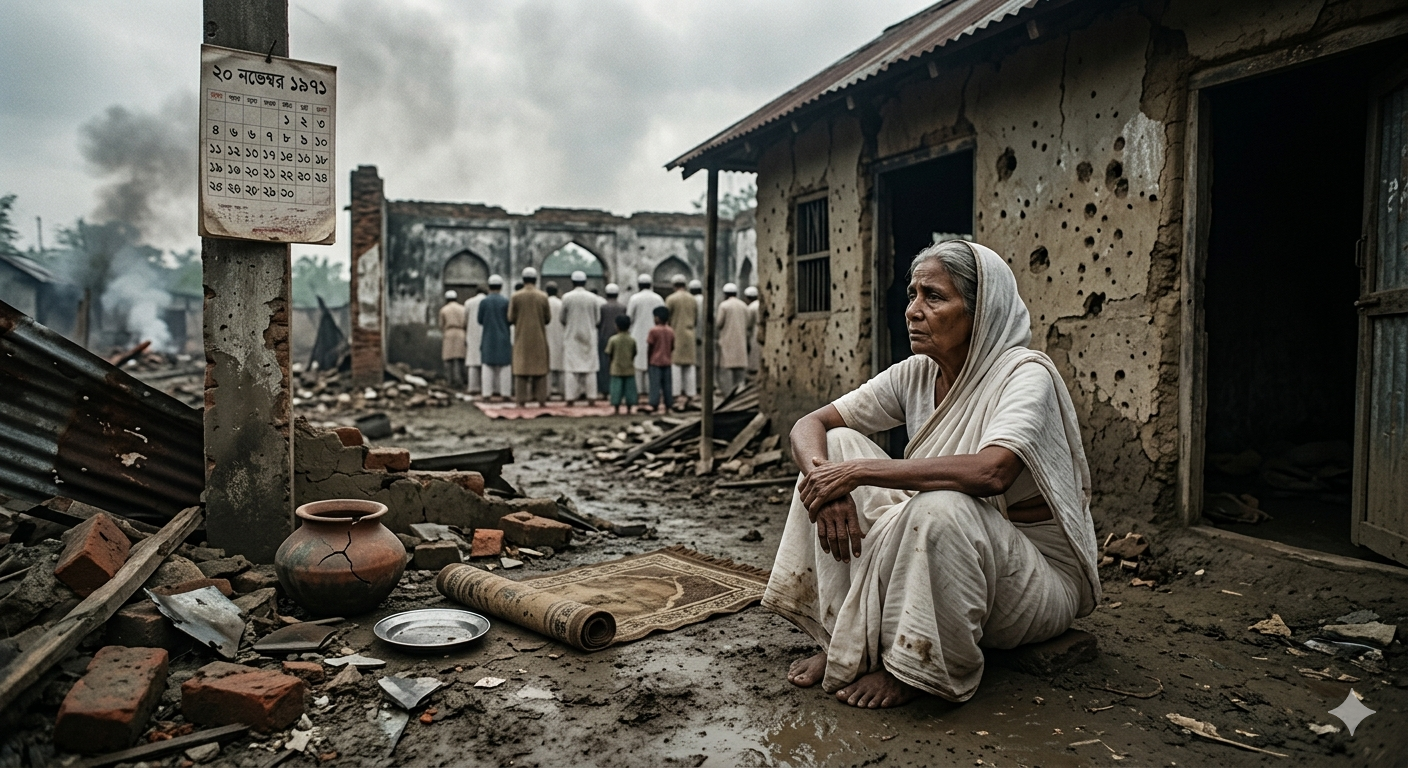
The year was 1971. The air of Bengal was heavy with the smell of gunpowder, and the land echoed with the cries of losing loved ones. At the final stage of a bloody nine-month war, Eid-ul-Fitr was observed on November 20. But that Eid did not bring joy; instead, it brought a silent vow of resistance and a profound message of grief.
Occupied Dhaka and the Gloomy Neighborhoods
In occupied Dhaka, the surveillance of the Pakistani forces was at its peak. Although official papers spoke of festivities, there was only terror in the hearts of the people. The streets of Dhaka were deserted. The traditional rhythm of Eid was lost to the thud of military boots and the roar of cannons. While the then Pakistani junta government tried desperately to project a sense of normalcy in the newspapers, the reality on the ground was entirely different.
Jahanara Imam, the Martyr Mother, wrote in her famous book Ekattorer Dinguli (The Days of ’71) in her diary entry for November 20:
Today is Eid. There is no joy, no preparation. There is no aroma of vermicelli in the kitchen, no new clothes. Only tears are bursting forth from the heart. Rumy is not here; there is no news of Rumy. What kind of Eid has come today, leaving the laps of thousands of mothers empty?
No One Dared to Say Eid Mubarak
Poet Sufia Kamal gave a heartbreaking description of that day in her book Ekattorer Diary (Diary of ’71). She noticed that on the day of Eid, people were even hesitant to say Eid Mubarak to one another. In a country where rivers of blood were flowing, the word Mubarak or Blessed felt like a cruel mockery.
From Sufia Kamal’s diary, we learn:
The gathering in the mosque was negligible. After the prayer, no one embraced each other. People returned home quickly with their heads bowed. In a country where there is a procession of corpses every day, what kind of Eid is this?
Eid on the Battlefield: The Freedom Fighter’s Prayer and Joy Bangla
While silence reigned in the city, the weapons of the freedom-loving Bengalis were roaring on the battlefield. To the freedom fighters, Eid was merely a date on the calendar. Memoirs of sector commanders reveal that they launched surprise attacks on enemy camps even on the day of Eid. To them, the real Eid was a sovereign map.
Shadhin Bangla Betar Kendro (Independent Bengal Radio Station) broadcasted special programs that day, which inspired the freedom fighters. Their slogan was— Our Eid will be on the day the country is freed from the invaders. Many freedom fighters fasted even on the day of Eid and celebrated by having simple meals in the trenches.
Junta Propaganda and the Role of Newspapers
Due to Pakistani censorship at the time, newspapers tried to show normalcy by publishing photos of Eid prayers. But behind the scenes, a horrific massacre was continuing. Even at Eid congregations, plainclothes intelligence officers were stationed in many places to ensure no one chanted political slogans.
Evaluation and Seeking Forgiveness: We Stand in the Court of History
Standing in today’s independent Bangladesh, thinking about the Eid of 1971 brings a strange sense of emptiness and guilt. Analyzing the references, it is clear that the Eid of 1971 was not just a religious festival; it was a part of the greatest political and nationalistic resistance of the Bengalis. Jahanara Imam’s tears or Sufia Kamal’s silence—each was a form of protest.
A Tribute to the Freedom Fighters
O heroic sons of the soil, you sacrificed the joy of Eid so that we could have the right to celebrate today. The Eid you spent in the trenches or under the open sky across the border was the most selfless Eid in modern history. The value of your sacrifice cannot be expressed in any words.
Forgiveness and Self-Realization
How much are we honoring the independence gained through such extreme sacrifice? It is deeply painful that today we hear news of freedom fighters being insulted in various ways. When a heroic freedom fighter is humiliated due to narrow politics or personal interests, it feels as if we have forgotten that mournful Eid of 1971.
Through this writing, I personally seek forgiveness from those heroes who have been insulted and those who are shed silent tears in solitude. We celebrate today standing on the debt of your blood, yet we fail to protect your dignity. O heroes, please forgive us. May this guilt shame us and awaken our conscience.
Until the dignity of the freedom fighters is 100 percent ensured in this country, our celebration of independence will remain incomplete. The somber Eid of 1971 reminds us—independence is not a gift; it is a sacred trust earned in exchange for blood and tears.
References
Ekattorer Dinguli – Jahanara Imam.
Ekattorer Diary – Sufia Kamal.
History and Documents of the Liberation War – Ministry of Information.
Archives of the then Daily Azad and Daily Pakistan (November 1971).